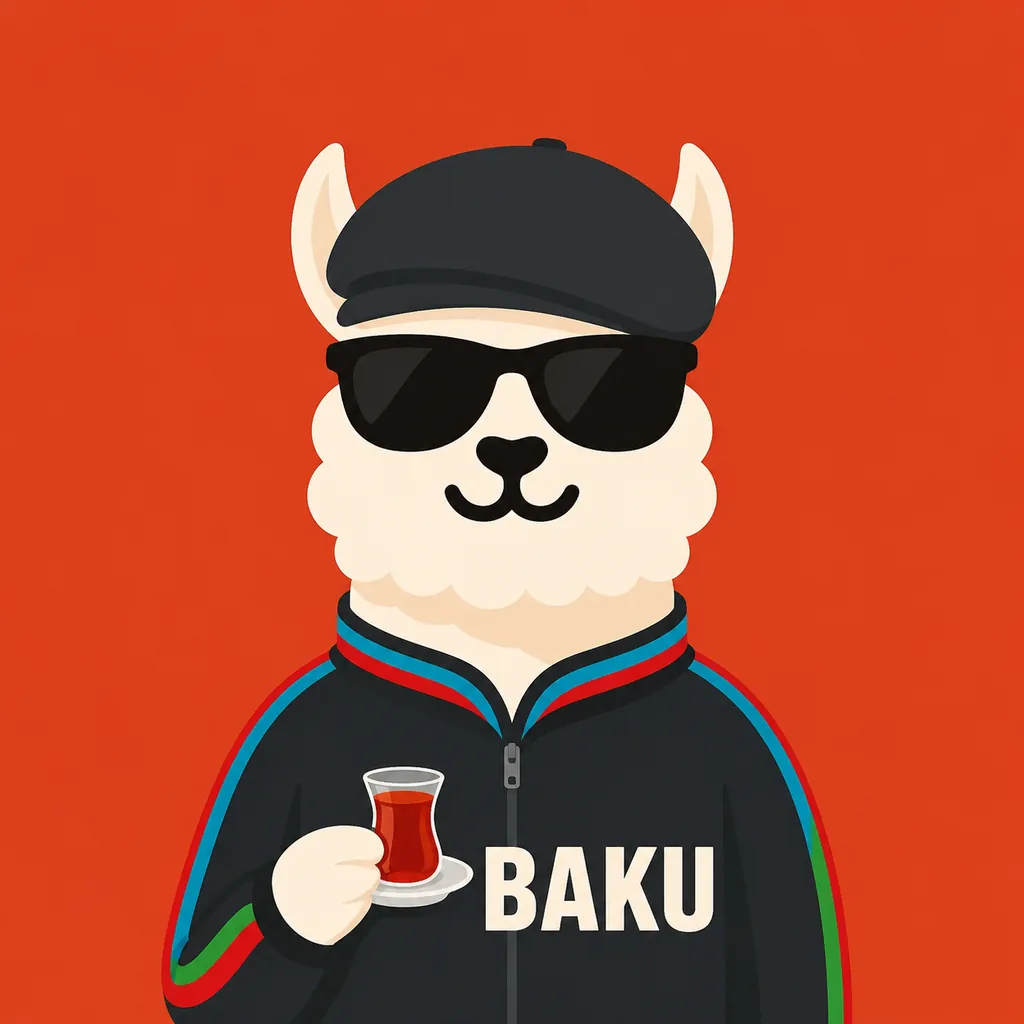
An exchange in Azerbaijan means Baku: a safe, cheap, weirdly futuristic Caspian capital where Silk Road history, Soviet leftovers and glass towers collide. It's for the curious, low-key adventurous student who wants somewhere nobody else picked, great food and warm locals over a massive Erasmus party scene.
Currency
Azerbaijani manat (₼)
Languages
Azerbaijani (Russian widely spoken)
Emergency number
112
Monthly budget
€650–1,050 / mo
When to go
Spring (April–June) and autumn (September–October) are ideal; summers get hot and humid, winters stay windy.
Getting around
Baku has a cheap, clean metro plus buses paid via a tap-and-go BakiKart; intercity trains and buses are slow but cost a few euros.
Visa in one line
Depends on your nationality, but most students (including EU, UK and US) need a proper student visa plus a temporary residence permit — the cheap tourist e-visa does not cover study.
🌍
Why go on exchange in Azerbaijan
Azerbaijan is the exchange nobody else in your cohort will have done, which is exactly the point. It sits where Europe, the Middle East and Central Asia blur together on the Caspian coast, so you get Soviet apartment blocks, medieval Silk Road mosques and glass skyscrapers on the same walk. Almost everything happens in Baku, a genuinely underrated capital that's safe, cheap by European standards and oddly futuristic.
Go if you want somewhere that still feels like an adventure rather than a stag-do destination, and if you're more curious than precious about creature comforts. You won't get a huge Erasmus crowd or nonstop clubbing, but you'll get brilliant food, warm locals and stories nobody back home can match. It rewards students who lean in.
🎉
Student life & the social scene
The scene is small and centred entirely on Baku. There's no giant Erasmus machine here, so your social life gets built through your university buddy programme, a handful of other exchange students and, crucially, local classmates who are genuinely excited to have you around. Azerbaijani hospitality isn't a cliche, expect to be fed, driven places and half-adopted by someone's family within weeks.
Nights out lean towards long dinners, tea houses, hookah lounges and the bars around Fountains Square and Nizami Street rather than sweaty megaclubs, though Baku does have proper nightlife if you go looking. Alcohol is legal and easy to find. It's more café-and-conversation than carnage, which most people end up loving.
💸
Money & cost of living
Azerbaijan is cheap for a European, and Baku is the priciest bit of it, so budget for the capital and you're covered anywhere. A realistic all-in student month lands around €650 on a tight budget and €1050 if you want your own studio and regular nights out. The local currency is the manat, roughly 1.8 to the euro.
Groceries, street food and public transport cost next to nothing; a metro ride is about €0.15 and a filling plate of kebab and bread runs €4–6. It's your rent and any imported Western brands that actually move the needle. Cash is still king in a lot of places, so keep manat on you.
Room in a shared central flat: €200–350/mo
Own studio in the centre: €350–500/mo
Groceries: €150–200/mo
Monthly transport (BakiKart): €15–20/mo
Cheap restaurant meal: €4–6
🏠
Finding a place to live
Most exchange students live in shared flats in central Baku, around Nizami, Sahil, the Old City (Icherisheher) or Nasimi, rather than in dorms, which are limited and pretty basic. The smart move is to book a hostel or short Airbnb for your first week, then flat-hunt in person once you're on the ground and can actually see the place and meet the landlord.
Search bina.az, Facebook groups (Baku flatmates/expats) and your university's international office, which often keeps landlord contacts. Rents are negotiable and frequently quoted in cash. Dodge anyone who wants a deposit by bank transfer before you've viewed the flat, and be wary of listings with suspiciously perfect photos at rock-bottom prices.
Room in a shared central flat: €200–350/mo
Studio in the centre: €350–500/mo
bina.az and Facebook expat groups are the main listing sources
Never wire a deposit before viewing in person
🚆
Getting around
Central Baku is very walkable, and the metro is your friend: clean, dirt cheap and reaching most places you'll need. You pay with a BakiKart, a rechargeable card you tap on the metro and buses, each ride costing a fraction of a euro. Buses fill the gaps, and Bolt or BakTaxi are cheap enough that a cross-town cab rarely hurts.
Intercity, trains and buses link Baku to Ganja, Sheki and the north for a few euros, though they're slow. The overnight sleeper train to Tbilisi in Georgia is a proper rite of passage. Driving yourself isn't worth the hassle, Baku traffic is chaos and parking a nightmare.
BakiKart, load it once, tap for metro and buses
Single metro ride, about €0.15
Bolt/BakTaxi, cheap cross-town taxis
Overnight sleeper train to Tbilisi, from ~€12
🎓
Universities & academics
Azerbaijan joined the Bologna Process, so universities run on ECTS credits with the usual 30 per semester, and your Erasmus+ learning agreement transfers cleanly. Autumn semester runs roughly September to January, spring February to June. Teaching can feel more formal and lecture-heavy than you're used to, attendance is taken seriously, and the relationship with professors is more hierarchical.
English-taught options are real but concentrated in a few places. ADA University is the standout, modern, English-medium and used to exchange students, alongside Khazar University, the French-Azerbaijani University (UFAZ) and select programmes at Baku State University and UNEC. Confirm exactly which modules run in English before you commit; catalogues can be optimistic. Workload is manageable once you adjust.
🛂
Visas & the paperwork
This depends heavily on your nationality, so check your own embassy first, but the short version is that most students need an actual visa, not just the tourist e-visa. Azerbaijan's cheap online ASAN e-visa is for short tourism only and does not cover study. For a full semester you apply for a student visa through the Azerbaijani embassy using an invitation letter from your host university.
Once you land, the big job is registering for a temporary residence permit with the State Migration Service, usually within your first days or weeks, your international office will walk you through it. One hard rule: an Armenian entry stamp or evidence of visiting Nagorno-Karabakh can get you refused entry, so sort your travel history in advance.
ASAN e-visa is tourism only, not valid for study
Student visa needs an invitation letter from your host uni
Register for a temporary residence permit soon after arrival
Prior travel to Armenia can cause entry problems
🍽️
Food, culture & everyday life
You'll eat well and cheaply. Azerbaijani food is a Silk Road mash-up of grilled meats (kebab, lula), plov (buttery saffron rice with meat and fruit), dolma, fresh bread from the tandir, and soups like dushbara. Tea is a whole ritual, served black in little pear-shaped armudu glasses with jam and sugar, often free after a meal, refusing it can read as rude. Meals run late and long; dinner is social and unhurried.
Culturally it's a mostly secular Muslim country, more relaxed than newcomers expect, but modesty and respect for elders go a long way. Ramadan and Novruz, the spring new year in March, with bonfires, sweets and street parties, are the big fixtures. Haggling in bazaars is normal; being loud about politics is very much not.
🏙️
Best cities for your exchange
Honestly, for an exchange this is a one-city show: Baku is where the universities, the jobs, the nightlife and basically every other exchange student are. The rest of the country is for weekends.
Baku, where you'll actually be based: seaside promenade, the Old City, buzzy student districts and everything an exchange needs
Ganja, the low-key second city inland, cheaper and quieter, more Azerbaijani immersion than international scene
Sumqayit, industrial commuter city near Baku; fine to visit, not somewhere you'd base an exchange
✈️
Travel & weekend trips
Azerbaijan is small enough that the big sights are day trips or one-nighters, which is perfect when you're skint. The Absheron Peninsula around Baku gives you Yanar Dag, a hillside that's been on fire for centuries, and the Ateshgah fire temple, both doable in an afternoon. Gobustan's ancient rock carvings and gurgling mud volcanoes are an hour south.
For a proper weekend, head to Sheki in the Caucasus foothills for the Khan's Palace and Silk Road caravanserais, or take the legendary overnight sleeper across the border to Tbilisi, Georgia, for a wildly cheap city break. Mountain villages like Lahij and Khinalug are stunning if you can split a car with mates.
Gobustan + mud volcanoes, day trip, ~1 hr south of Baku
Yanar Dag & Ateshgah fire temple, half-day on the Absheron Peninsula
Sheki, Silk Road town, ~5 hrs, best as an overnighter
Tbilisi, Georgia, overnight sleeper train from ~€12
Lahij or Khinalug, mountain villages, split a taxi with friends
💡
Insider tips & rookie mistakes
None of this is hard, but a few things reliably trip students up. Baku is nicknamed the City of Winds for a reason, cash matters more than your card, and a bit of Russian or Azeri goes a long way the moment you leave the tourist core.
Learn a few Azeri/Russian phrases, English drops off fast outside young Baku
Carry cash; plenty of places still don't take cards
Don't debate the Armenia conflict or show up with an Armenian stamp
Accept the tea, turning down hospitality reads as rude
Get your residence permit sorted early with the international office
Pack a windproof jacket even in summer; Baku is genuinely gusty
Exchange tools
Plan it before you fly.
Free tools to budget, pick a city and sort your paperwork.
Which cities can I go on exchange to in Azerbaijan?
We cover 1 cities in Azerbaijan, including Baku. Each has its own guide, with reviews from students who went and a WhatsApp group for the ones arriving next.
How much does an exchange in Azerbaijan cost per month?
Plan on 650 to 1,050 euros a month in Azerbaijan, rent included. What you actually pay depends mostly on which city you land in and whether you share a flat.
What language do you need to study in Azerbaijan?
Azerbaijani (Russian widely spoken). Most exchange programmes also teach in English, but daily life goes a lot better with a few words of the local language.
When should I go on exchange to Azerbaijan?
Spring (April–June) and autumn (September–October) are ideal; summers get hot and humid, winters stay windy.
Get started
Your city’s already waiting.
Join the group, skip the scams, land sorted. 100% Free.