Vienna is a capital that runs like clockwork: spotless public transport, drinkable tap water, safe streets at 3am and around 200,000 students across nine universities. You get the cultural weight of Mozart, Klimt and the coffee houses without the frantic pace of Paris or London, plus fast trains that put Budapest, Prague and Bratislava within a couple of hours. It is pricey by Austrian standards but still gentler on your wallet than Zurich or Munich.
City Overview
The Vienna TL;DR
Imperial-city culture at student prices — Vienna's €75-ish semester transport pass, cheap Mensa lunches, Würstelstand nights and ski trips an hour from class. Big ESN scene in Vienna, Graz and Innsbruck.
- Monthly budget
- €900–1,350
- Language
- German (Austrian dialect)
- Best time
- Winter semester runs October to late January, summer semester March to end of June.
- Currency
- Euro (€)
- Nightlife
- 4/5
- Safety
- 5/5
Vienna pairs imperial grandeur with one of Europe's biggest student populations, so you get world-class culture on a manageable budget in a city that consistently tops global liveability rankings.
Partners & Perks
Verified housing partners and student perks in Vienna: no blind deposits, no ghost landlords. Grab one before someone in your group does.
The scene splits between the imperial and the alternative. In summer everyone drifts to the Donaukanal bars and the Danube Island for free swimming and open-air festivals; in winter it moves to the Guertel arches under the U6 line and the Bermuda Triangle near Schwedenplatz. The Erasmus Student Network runs weekly meet-ups, and the university mensa canteen is where you will make your first friends over a cheap lunch.
- Grab a spritzer and join the crowd along the Donaukanal on a warm evening, near Flex and Tel Aviv Beach.
- Follow ESN Vienna for their weekly Erasmus nights and discounted trips to the Alps and neighbouring capitals.
- For clubbing, Grelle Forelle, Flex and Pratersauna cover techno, while Volksgarten is the go-to for a dressier night.
Vienna sits at the top of the Austrian range: budget roughly 1,000 to 1,400 euros a month once rent is in, though frugal students in a shared flat manage closer to 950. Your single best money move is the student semester transport ticket at around 75 euros for the whole term. Eating at a university mensa costs 5 to 8 euros, and a half-litre of beer runs 4 to 5 euros in a normal bar.
- Buy the Semesterticket from Wiener Linien (about 75 euros if you are under 26 and registered in Vienna) instead of the 365-euro annual pass.
- Eat lunch at any Mensa canteen for 5 to 8 euros; Hofer and Lidl are far cheaper than Billa or Spar.
- A shared-flat room runs 400 to 650 euros a month; a dorm room through OeAD often lands under 400.
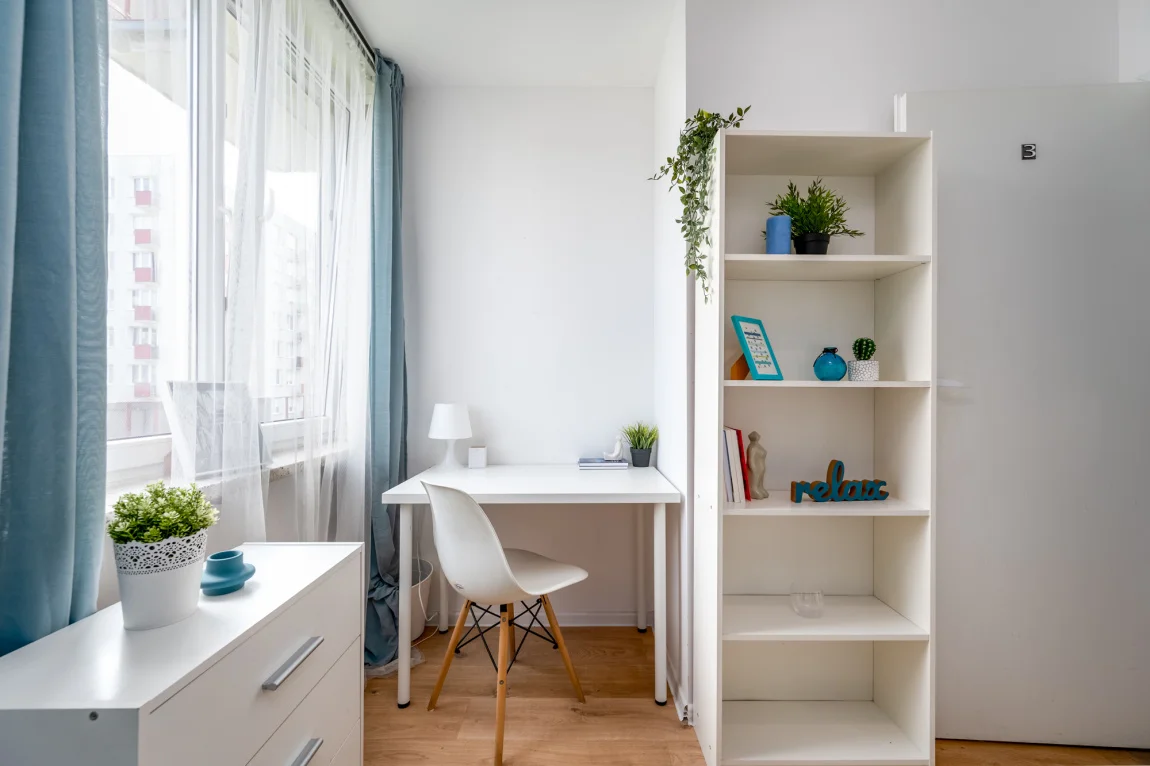
Vienna's rental market is calmer than Barcelona's but you still want to start early. The classic student option is a WG (a shared flat) found on WG-Gesucht, or a subsidised dorm room booked through a provider like OeAD, home4students or WIHAST. Beware any landlord asking for a deposit before you have viewed the place, a common scam targeting arriving students.
- Search WG-Gesucht.de and the Facebook group 'WG-Zimmer und Wohnungen Wien'; messaging in German doubles your reply rate.
- Apply months ahead to dorm providers OeAD, home4students, WIHAST or STUWO, where bills are usually included.
- Ask the Vienna group on Studcasa which districts fit your campus; a room in Favoriten by a U1 stop beats a cheaper one with a 45-minute commute.
The Wiener Linien network of five U-Bahn lines, dozens of trams and a dense bus web will get you anywhere, and night buses plus 24-hour weekend metros cover the small hours. Almost everything inside the Ringstrasse is walkable, and the flat centre is a dream for cycling. You will rarely wait more than five minutes for a train.
- Ride the U-Bahn and trams on your Semesterticket; the U6 and tram lines D, 1 and 71 are the ones you will use most.
- Rent a WienMobil Rad bike or use the flat cycle lanes for short hops in the centre.
- For late nights the N-line night buses and the all-night weekend U-Bahn mean you never need a taxi.
Vienna's universities are huge: the University of Vienna is one of the oldest in the German-speaking world, TU Wien is the top technical school, and WU Wien's Zaha Hadid campus is a destination in itself. Lectures can feel impersonal with hundreds of students, so registration for seminars and exams via u:space or TISS opens on fixed dates and fills fast, so set an alarm.
- Register the minute enrolment opens on u:space (Uni Wien) or TISS (TU Wien); popular seminars fill within minutes.
- The main university library and the WU library are open late and free to use, so arrive early in exam season for a seat.
This depends entirely on your nationality. EU/EEA and Swiss students don't need a visa, you just register your address (the Meldezettel) at the local Magistrat within three days of arriving, and if you stay over three months you file an Anmeldebescheinigung (registration certificate) at the MA 35 immigration office.
Non-EU students need a residence permit. For a semester under six months it's usually a Visa D (national visa); for a full year it's the Aufenthaltsbewilligung Studierende (student residence permit), which you generally apply for at an Austrian embassy before you travel. Expect to prove funds (roughly €600+/month), health insurance and your acceptance letter. Start early, appointments and processing are slow.
- EU/EEA/Swiss, no visa; just register your address (Meldezettel)
- Non-EU, under 6 months, Visa D (national visa)
- Non-EU, full year, student residence permit (Aufenthaltsbewilligung Studierende)
- Bring: acceptance letter, proof of funds (~€600+/mo), health insurance
Vienna's soul lives in its coffee houses, where you can nurse a melange for hours as a paying guest at Central, Sperl or Pruckel. Food-wise, work through a proper Wiener schnitzel, a Kaesekrainer from a late-night sausage stand, and a slice of Sachertorte, then head to a Heuriger wine tavern in Grinzing for young wine straight from the grower.
- Do a long lunch at the Naschmarkt, and hit the cheaper, more local Brunnenmarkt in Ottakring for produce.
- Order a 'Melange' (not a latte) in a traditional Kaffeehaus and do not rush; the table is yours as long as you like.
- In autumn, take tram 38 to a Grinzing Heuriger for Sturm, the cloudy new wine, and cold cuts.
Vienna is carved into 23 numbered districts, and the number tells you the vibe. The 7th (Neubau) is the creative heart of boutiques, Spittelberg's cobbled lanes and the MuseumsQuartier; the 2nd (Leopoldstadt) has the Prater, the Karmelitermarkt and a young mixed crowd; the 9th (Alsergrund) is studenty and close to the main campus. Broadly, the higher the district number, the cheaper the rent.
- Neubau (7th) and Josefstadt (8th) for cafes, nightlife and being central, though pricier.
- Leopoldstadt (2nd) and Favoriten (10th) for better value with quick U-Bahn links to campus.
- Alsergrund (9th) if you study at the main University of Vienna site and want to roll out of bed to lectures.
Vienna is one of the best-connected launch pads in central Europe. Bratislava is barely an hour away by train or the Twin City Liner boat down the Danube, Budapest and Prague are easy weekends, and the Wachau Valley's vineyards and the Semmering Alpine railway are on your doorstep. OeBB regional tickets make group day-trips absurdly cheap.
- Take the OeBB Railjet to Salzburg (2.5h), Graz (2.5h) or across the border to Budapest and Prague.
- For a day out, take the train or a boat to Krems and hike the Wachau vineyards, or bus to Bratislava in an hour.
- Split an OeBB 'Einfach-Raus-Ticket' with friends for unlimited regional trains on a Saturday for a few euros each.
Vienna rewards you for playing by its many rules. Register your address at the Meldeamt within three days of arriving, as you need the Meldezettel for everything from a bank account to your transport pass. Locals are formal at first but warm up quickly, and a mumbled 'Gruess Gott' goes further than 'hallo'. On Sundays almost everything except restaurants shuts, so shop on Saturday.
- Do your Meldezettel registration and open a bank account (Erste Bank or N26) in your first week; you will be asked for both constantly.
- Ticket inspectors on the U-Bahn are frequent and plain-clothed, and a fare-dodging fine is 105 euros.
- Stock up on Saturday, since almost every supermarket closes all day Sunday.
Student Reviews
Your city’s already waiting.
Join the group, skip the scams, land sorted. Free, no sign-up, no corporate nonsense.