Loading…
Hola!Ciao!안녕!Salut!Olá!你好!
StudcasaSaying hi in 12 languages…Meeting your group…Warming up the chat…Loading…
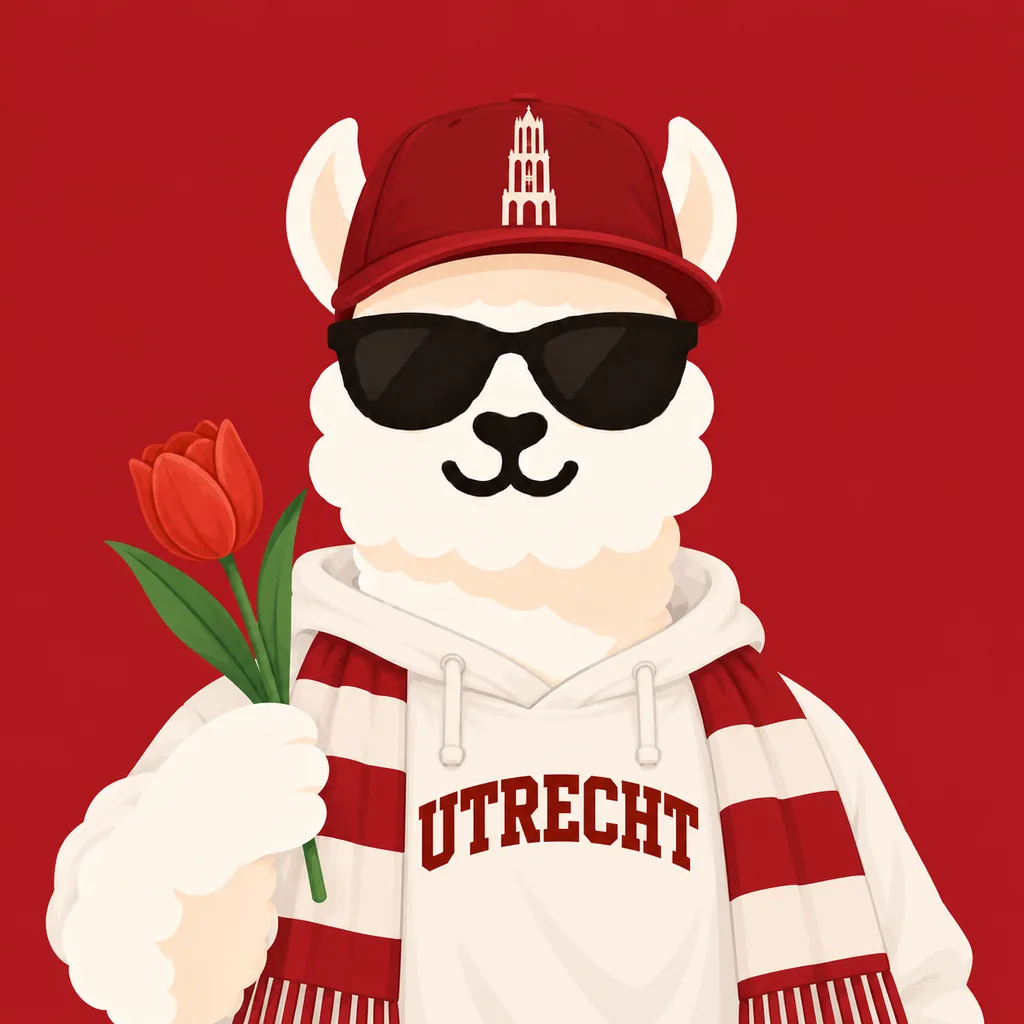 AMSAMSUtrecht · NL
Exchange destination
Utrecht.
Utrecht is the Netherlands' fourth-largest city and arguably its biggest student town: a compact, canal-ringed centre where three institutions enroll over seventy thousand students.
Netherlands avg / mo
€1,000–1,500
Language
Dutch
Time zone
CET · UTC+1
Currency
EUR €
Dear future me,
Say yes to the first invitation. Learn ten words. Start the housing hunt early.
To
You, exchange student
c/o Utrecht group chat · Fall 2026
City Guide
Utrecht packs serious academic weight into a small, walkable frame. Utrecht University, founded in 1636, is the country's largest, joined by Hogeschool Utrecht and the HKU school of the arts for a combined student population above seventy thousand. The medieval centre wraps two levels of canals lined with wharves and cellars, the 112 metre Dom Tower anchors the skyline, and Utrecht Centraal is the country's busiest station. Fourth in size behind Amsterdam, Rotterdam and Den Haag, Utrecht trades big city sprawl for a university town where everything sits within cycling distance.
With three institutions in one small city, Utrecht's social scene runs on student numbers alone. ESN Utrecht, its Erasmus Student Network chapter, fields nine committees and more than fifty student volunteers who organise day and weekend trips, workshops, pub quizzes and parties throughout the year. The city centre, dense with cafes, bars and restaurants that exist largely because of the yearly influx of students, doubles as the social hub. TivoliVredenburg, the concert hall by the station, adds gigs and club nights most weeks, so plans rarely have to reach beyond a short bike ride.
Utrecht University tells exchange students to plan for 800 to 1,000 euros a month in living costs on top of rent. A room typically runs 425 to 1,100 euros a month depending on type and location, health and liability insurance adds 40 to 100 euros, and books or study materials cost 65 to 85 euros a month depending on your programme. The university also flags a one off 500 euros for a bicycle and other startup costs, since a bike quickly becomes essential kit rather than a luxury here.
Dutch universities do not own student housing, so finding a room in Utrecht is entirely on you. Utrecht University reserves a limited number of furnished rooms and studios through its Reserved Accommodation Programme for new international students who meet the requirements, so apply the moment applications open. Commercial and social housing providers list further rooms through portals, lotteries and waiting lists. The university is blunt about the market: it is very competitive, direct offers disappear fast, and you should spread your search across every channel rather than relying on one.
Utrecht runs on two wheels: 51 percent of trips inside the city are made by bike, and the flat, compact layout makes cycling the fastest way to campus. For everything else, U-OV operates the region's buses and trams, payable by tapping a bank card or phone through OVpay or with an OV-chipkaart, with U-OV Max subscriptions for frequent riders. Utrecht Centraal, the country's largest station, runs intercity trains to Amsterdam and Rotterdam roughly every ten minutes and to Den Haag and Schiphol Airport every fifteen, so the rest of the country is genuinely close.
Utrecht University spreads across seven faculties, most clustered on Utrecht Science Park east of the centre, while Humanities and Law, Economics and Governance stay in the historic inner city. The academic year splits into two semesters, each cut into two teaching blocks, and exchange students pick at least two courses per block from a maximum of two faculties, with at least half at their main faculty. Utrecht University runs a large number of English taught courses at bachelor's and master's level. Hogeschool Utrecht and the HKU school of the arts, the city's other big institutions, run their own exchange tracks with separate application routes.
As always, it depends on your nationality. EU/EEA/Swiss students need no visa and just register with the local municipality. Non-EU students usually need an entry visa (MVV) and/or a residence permit, but here's the good news: your Dutch host university almost always handles the application for you as the official sponsor, so follow their international office to the letter and start early.
After arrival you'll register at the gemeente (municipality) to get a BSN citizen number, which you need for a bank account and much else, and arrange health insurance. EU students use the EHIC; non-EU students need private cover, and working part-time can trigger a Dutch insurance requirement.
Vredenburgplein, right by the station, hosts a market on Wednesday, Friday and Saturday, the Saturday session running largest from eight to five. Stalls sell Dutch cheese, fresh produce, fish and baked goods alongside hot kibbeling and stroopwafels straight off the griddle, and it draws as many students as families. Beyond the market, the centre's dense cluster of cafes and bakery style coffee spots reflects the city's slower, coffee and a book pace even with tens of thousands of students around. Cycling culture shapes daily rhythm too: rain gear and good lights are treated as basics, not extras, from your first week.
The city centre puts you closest to nightlife and both main campuses but comes at the highest rent and the most noise. Wittevrouwen, Oudwijk and the Vogelenwijk, just northeast in Utrecht Oost, are the classic student patch: pre 1900 houses, a village feel and a short cycle to Utrecht Science Park, at gentler prices than downtown. Lombok, west of the station, is Utrecht's multicultural quarter, cheaper and lively around Kanaalstraat's food shops. Kanaleneiland, further out, trades some atmosphere for its lowest rents while staying within about fifteen minutes of the centre and station by bike.
Utrecht's central position makes it the easiest base in the country for weekend trips. Amsterdam and Rotterdam sit roughly half an hour away by direct intercity, Den Haag about forty minutes, all frequent enough to plan on the day. The windmills of Kinderdijk make a manageable day trip by train and bus. Cross into Belgium and Antwerp is under two hours away, close enough for an afternoon of chocolate shops and its cathedral square. For a longer weekend, direct ICE trains run from Utrecht Centraal to Cologne in as little as two hours, opening up the Rhine and German Christmas markets in season.
Register with the municipality within five days of arrival if you are staying more than four months. It is how you get your BSN, the number you need for a bank account, health insurance and often a part time job, and Utrecht runs dedicated desks for international students at the start of each semester. Apply for reserved accommodation the moment the window opens rather than waiting to arrive. Buy a decent bike and lock in your first week rather than borrowing one, since almost every plan here assumes you have one. Layer up for wind and rain, since flat, open terrain makes both feel stronger on a bike.
Student Reviews
 VirginiaAristotle University → Utrecht University · Fall 2025★ 8.0
“I recommend meet your brain and climate and society. Mathematics and programming are really difficult especially if you don’t have a background in maths”